Pet-Safe Smart Home Checklist: AI Tips for Dogs & Cats
AI Pet-Safe Home Guide: Smart Living Checklist for Pet Owners
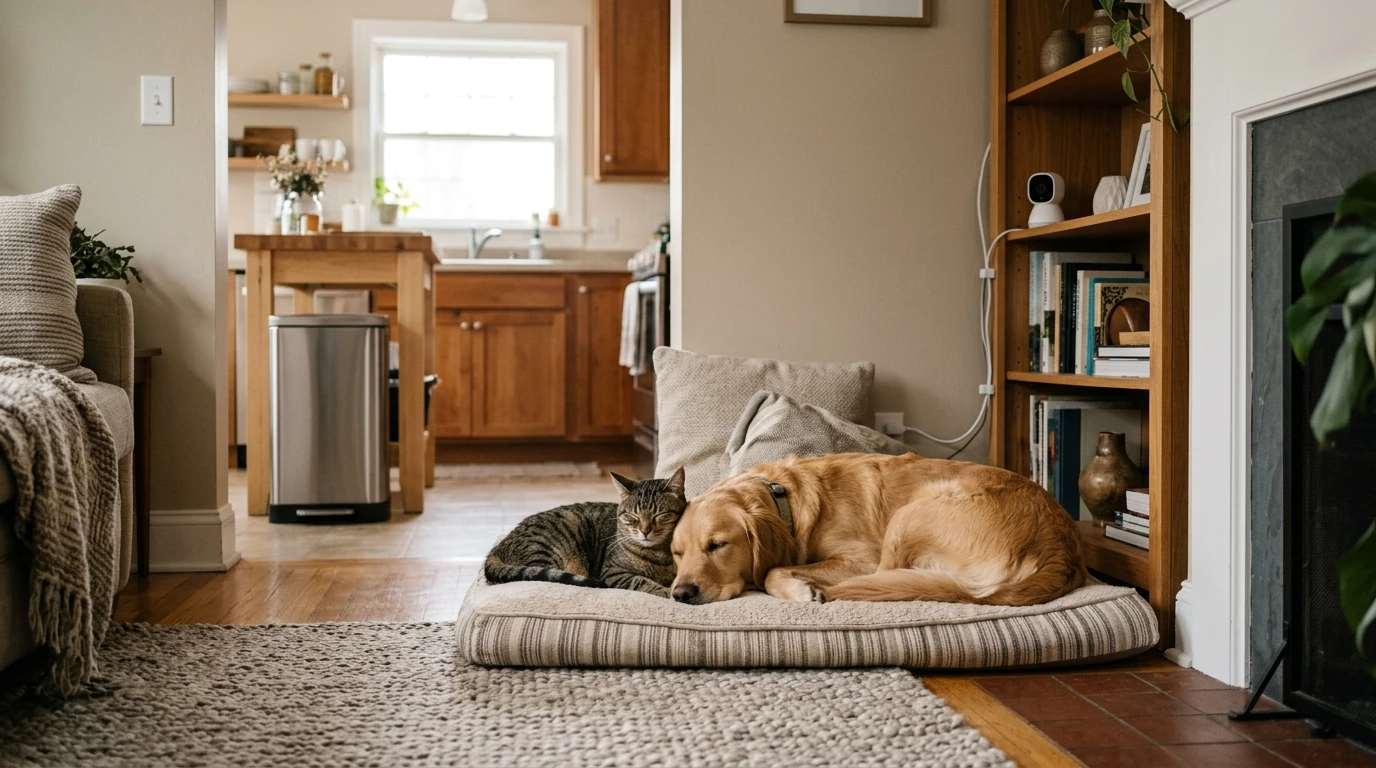
A pet-friendly home is safer when risks are easy to spot and routines are easy to follow. This guide organizes common household hazards into a practical smart-living checklist—covering room-by-room risks, simple AI-assisted monitoring ideas, and quick actions that reduce accidents for dogs and cats.
How smart living supports a safer home for pets
Smart living works best when it reduces the “oops” moments that lead to emergencies. The goal isn’t to add complexity—it’s to make safe habits easier to repeat.
- Use automation to reduce human error: set reminders for medication storage, trash day, and putting cleaning products back behind closed doors.
- Prefer prevention over reaction: scan for chew, swallow, tip-over, and toxic-exposure risks before they become urgent.
- Pair convenience with boundaries: establish pet-free zones, closed-door rules, and simple cord management.
- Keep changes predictable: many pets do better when lights, sounds, and feeding routines stay consistent.
Quick-start safety checklist (15 minutes)
If time is tight, do a fast sweep that targets the most common “grab-and-go” hazards.
- Pick up floor-level hazards: rubber bands, hair ties, small toys, coins, batteries, sewing needles, and string.
- Secure food and trash: use lidded bins, latch the pantry if needed, and avoid leaving cooling food within reach.
- Remove toxin access: store cleaners, pesticides, essential oils, and medications in closed cabinets.
- Check cords and outlets: bundle cords, cover unused outlets, and block access behind TVs and desks.
- Create a calm zone: set up a bed/crate area away from loud appliances, with water access and a chew-safe toy.
Fast home scan: common hazards and quick fixes
| Area | High-risk items | Fast fix | AI/smart-living assist |
|---|---|---|---|
| Kitchen | Trash, human food, dish pods, sharp tools | Latching bin + drawer/cabinet locks | Voice reminders to take trash out; smart plug timer for countertop appliances |
| Living room | Cords, small batteries/remotes, plants | Cord sleeves; store batteries high; verify plant safety | Camera alerts for counter surfing or plant chewing |
| Bathroom | Medications, razors, cleaners | Closed cabinet storage; hamper with lid | Routine checklist reminders for guests/house-sitters |
| Laundry/garage | Antifreeze, detergents, rodenticides | Lockable storage; keep doors shut | Door sensors to reduce accidental access |
| Bedroom/office | String, earbuds, hair ties, desk snacks | Closed containers; keep bags off the floor | Daily “floor sweep” reminder automation |
Kitchen and dining: the highest-risk zone
The kitchen combines the most tempting smells with the most concentrated hazards. A few consistent rules make a big difference.
- Food safety basics: prevent access to chocolate, grapes/raisins, onions/garlic, xylitol-containing products, alcohol, and caffeinated drinks. The ASPCA’s list of people foods to avoid is a solid reference.
- Counter and stove risks: keep hot pans away from edges, avoid unattended stovetops, and block access to open ovens.
- Trash and compost: use locking lids and avoid leaving bone scraps or greasy wrappers where pets can swallow them.
- Dishwasher and detergents: store pods and rinse aids up high; keep the dishwasher closed to prevent licking residues.
- Smart-living habits: schedule “clean counters” alerts after meals and before bed; consider motion alerts if a pet repeatedly jumps on counters.
Living room and common areas: cords, climbing, and choking hazards
Common areas are where pets spend the most time—so small, frequent risks add up.
Bathroom, laundry, and garage: toxins and hidden dangers
- Medication control: keep pill organizers, gummies, and topical creams in closed cabinets; never leave purses on the floor.
- Cleaning products: store bleach, disinfectants, drain cleaners, and toilet tablets securely; ventilate after use and restrict access until floors are dry.
- Laundry supplies: prevent exposure to detergent pods and fabric softeners; use a lidded hamper to reduce sock/underwear ingestion.
- Garage chemicals: antifreeze, paints, fertilizers, and pesticides should be locked away; wipe spills immediately. The AVMA’s poison prevention guidance is helpful for setting storage rules.
- Smart-living assist: door sensors can reduce accidental access to garages/laundry rooms; routine reminders help after cleaning days.
Smart-home and AI safety: practical, pet-friendly setup
Emergency readiness: plan first, then store supplies
- Create a pet emergency card: vet number, nearest emergency clinic, microchip ID, allergies, and medications.
- Stock a pet-first-aid kit: gauze, nonstick pads, bandage wrap, saline, tick remover, and a digital thermometer (pet-safe use).
- Know poisoning steps: keep your pet away from the substance, save packaging, and call a professional hotline/vet immediately. For fast guidance, Pet Poison Helpline is a widely used resource.
- Transport readiness: keep a carrier/crate accessible and a leash/harness at the door; practice quick, calm loading.
- House-sitter protocol: write a short checklist covering feeding, doors, prohibited foods, and where supplies are stored.
Printable checklist: a simple routine that sticks
Helpful downloads to make the routine easier
- AI Pet-Safe Home Guide – Smart Living Checklist for Pet Owners | ai pet safe home checklist (digital download)
- Waste Wise: A Home Recycling Guide | Simple Home Waste Sorting System, Eco-Friendly Living Guide & Digital Download (digital download)
FAQ
What are the most common household items that send pets to the vet?
Common culprits include toxic foods (like chocolate, grapes/raisins, and xylitol), human medications, cleaners, toxic plants, batteries, and swallowed foreign objects. Prevention is best, but if exposure happens, contact your vet or a poison hotline right away.
Are essential oils safe to use around cats and dogs?
Some essential oils can be harmful, and risk varies by oil type, concentration, and how a pet is exposed. Keep diffusers and oils away from pets, ventilate well, and ask a veterinarian for guidance on specific products.
How can smart-home alerts help without overwhelming a pet owner?
Limit notifications to a few high-value events—like doors left open, repeated counter access, or unusual nighttime motion—then use schedules/quiet hours to reduce noise. Review alerts weekly and adjust sensitivity so warnings stay meaningful.











Leave a comment