Yellow 10-Piece Silicone Utensil Set for Nonstick Pans
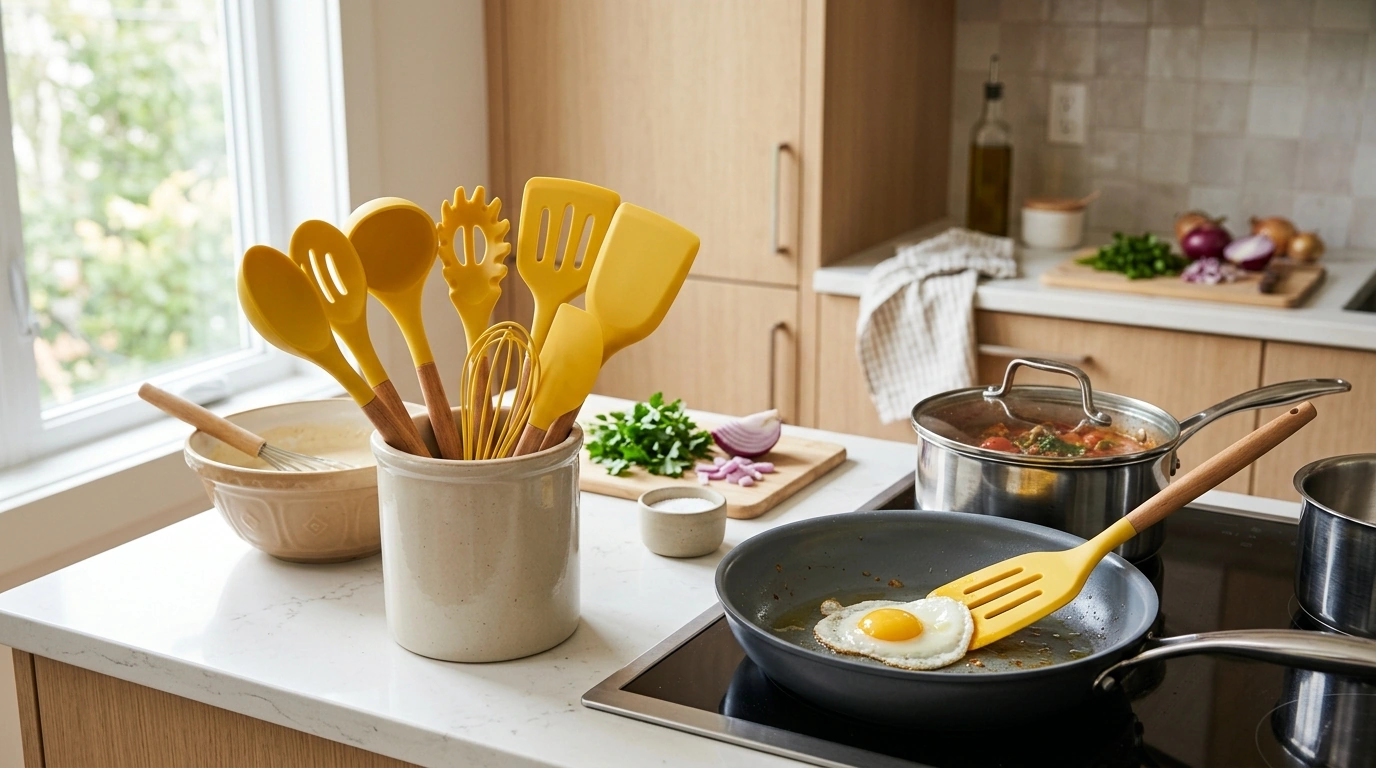
10-Piece Yellow Silicone Cooking Utensil Set for Everyday Nonstick Cooking
A well-rounded utensil set simplifies daily cooking, protects nonstick cookware, and keeps prep moving smoothly from stirring to serving. This 10-piece yellow silicone set is designed to cover the most common kitchen tasks with heat-friendly, non-scratching tools that are easy to clean and comfortable to use. If most meals happen in a skillet or saucepan, silicone utensils are a practical upgrade that helps you cook confidently without worrying about scraping delicate coatings. For more guidance, see In-Depth Product Reviews: Silicone Spatulas, Turners, and Scrapers ….
What a 10-piece silicone utensil set helps with
- Reduces scratches and wear on nonstick and ceramic cookware compared with metal tools.
- Handles common tasks: stirring sauces, flipping eggs, scraping bowls, serving pasta, and mixing batters.
- Creates a consistent, organized setup when multiple utensils are needed during a single cook.
- Bright yellow color makes tools easy to spot in a drawer or utensil crock.
- Silicone heads are typically gentle on cookware and can be simpler to clean than porous wooden tools (when made from solid, food-grade silicone).
Silicone also tends to be quieter than metal on pans, and it won’t splinter like wood can over time. For households that cook frequently, a matching set keeps the “right tool” within reach, especially when you’re flipping, stirring, and serving back-to-back. For further reading, see MIBOTE Silicone Cooking Kitchen Utensils Set, Wooden Handle, Teal.
Set overview: pieces and typical uses
A useful 10-piece set usually includes a mix of turners/spatulas, spoons/ladles, and scraping tools so you can move between breakfast, weeknight dinners, and baking without switching to metal or disposable tools. The most helpful sets avoid too many duplicates and include at least one flexible scraper for bowls and one sturdier turner for pan work.
If the set comes with hanging loops or a holder, it’s easier to keep utensils dry after washing and reduce countertop clutter—especially in smaller kitchens.
Common utensil types in a 10-piece silicone set and what they’re used for
| Utensil type | Best for | Cookware-friendly notes | Quick care tip |
|---|---|---|---|
| Turner / spatula | Flipping eggs, pancakes, fish fillets | Avoids scraping coatings when edges are silicone | Rinse promptly after contact with sugary sauces to prevent stickiness |
| Spoon / solid spoon | Stirring soups, sautéing vegetables | Gentle on nonstick surfaces | Soak briefly if food dries on |
| Slotted spoon | Lifting vegetables or dumplings from liquid | Slots reduce mess and dripping | Check slots for trapped residue before drying |
| Ladle | Serving soups, stews, sauces | Silicone bowl helps prevent scratching | Dry fully to avoid water spots in the bowl |
| Scraper / spoonula | Scraping pots and bowls, folding batters | Flexible edge reaches corners without scraping | Wash soon after oily batters to reduce film |
| Tongs (if included) | Turning meats, tossing pasta or salad | Silicone tips protect cookware | Avoid prolonged direct contact with open flame |
Heat, safety, and material details to confirm before buying
- Heat tolerance: verify the maximum temperature rating and avoid leaving utensils resting on a hot pan edge for extended periods.
- Food-contact safety: choose products labeled food-grade silicone; avoid unknown blends that can retain odors or feel tacky over time. For background on food-contact materials, review the FDA’s information on food contact substances.
- Core construction: utensils with a reinforced core (often stainless steel or sturdy nylon) tend to feel firmer for lifting and flipping.
- Odor and stain resistance: darker sauces (tomato, curry) may tint lighter silicone; prompt rinsing reduces staining.
- Comfort and grip: handles should feel secure when wet; hanging holes are useful for drying and storage.
Silicone is widely used in kitchen tools because it’s flexible, durable, and resistant to temperature swings. If you’d like a broad overview of silicone as a material, the American Chemistry Council’s silicone overview is a helpful reference point.
Care and cleaning for longer-lasting silicone tools
- Daily cleaning: wash with warm water and a grease-cutting dish soap; focus on seams where residue can collect.
- Deep clean when needed: a short soak in hot, soapy water helps lift oily films; a soft brush can clean slots and textured areas.
- Odor reset: if utensils pick up smells, try a baking-soda wash or a brief vinegar-water rinse, then air-dry thoroughly.
- Avoid harsh abrasion: skip steel wool and abrasive powders that can dull surfaces or roughen edges.
- Storage: keep away from direct heat sources; avoid tightly compressing silicone heads for long periods to help them keep shape.
Who this set fits best
Product options (in stock)
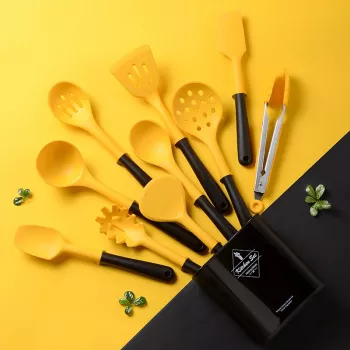
- 10PCS Yellow Silicone Cooking Utensil Set — a bright, coordinated set intended for common cooking and serving tasks.
- Waste Wise: A Home Recycling Guide | Simple Home Waste Sorting System, Eco-Friendly Living Guide & Digital Download — helpful for setting up a simple sorting routine for packaging from groceries and pantry staples.
- No-Stress Packing Checklist for Traveling With Kids – Ultimate Family Travel Guide & Digital Download — a practical add-on for busy households that like keeping essentials organized beyond the kitchen.
FAQ
Will silicone utensils damage nonstick pans?
Silicone is generally non-scratching and is typically safe for nonstick and ceramic coatings. Damage usually comes from sharp edges, excessive force, or cookware coatings that are already degraded, so gentle use still matters.
How hot can silicone cooking utensils get before they warp?
It depends on the manufacturer’s maximum temperature rating, so it’s best to confirm the stated limit before buying. To reduce warping risk, keep utensils away from direct flame and avoid leaving them resting on hot pan rims for long periods.
Why do silicone utensils sometimes feel sticky or hold odors?
Sticky feel and odors often come from residue buildup (oils, soaps) or lower-quality silicone blends. A hot, soapy soak or a baking-soda wash followed by thorough drying usually helps; choosing food-grade silicone can also reduce these issues.









Leave a comment